Posts

Something I want to believe - A Sermon preached August 9, 2020 at St. Margaret's Anglican
Image
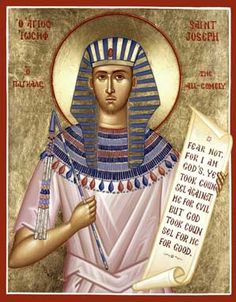
  The Generations...   “Jacob settled in the land where his father had lived as an alien, the land of Canaan. This is the story of the family of Jacob.”   One of the peculiar things about the book of Genesis is its structure. The book is structured around the word, “toledoth” which is often translated “generations” in English translations. Sometimes this makes sense given the way we use “generations” in normal English usage, as there are several genealogies listed throughout the book, including the genealogy of Esau in the chapter immediately preceding our reading today. But elsewhere in Genesis, the toledoth marks a narrative of origins. Our reading today is this latter type, and is the opening scene of the toledoth of Jacob. This is the longest toledoth in the book of Genesis, stretching from chapter 37 to the end of the book.   Given the toledoth structure of the book of Genesis, we may be tempted to read Genesis as history, for what else could a book of...

Laugh at the Devil

Image
This year, due to the coronavirus, St. Margaret’s Anglican got permission to celebrate Holy Week with the Orthodox according to the Julian calendar, so everything is running a week behind. This is a reflection I was asked to provide for our “Palm Sunday” weekend, Saturday service.  I don’t like Palm Sunday. It always seems a bit too forced, a bit too put-on, a bit camp really. For over a month Lent has dragged on, making me face my mortality and the problems of sin, evil, and suffering. I read this book by Ben Myers once when I was 18 or 19 that introduced me to Rowan Williams and T. S. Eliot and the “lenten” spirituality they represent, and I’ve kind of loved staring down the barrel of Good Friday ever since. A religion that takes seriously the problem of godforsakeness that we see made manifest on the cross is a religion I can sign on to. But for some absurd reason this melancholic spirituality that suits me just fine is interrupted by the carnival procession of foliage we...

Some preliminary thoughts on Anglican responses to Covid-19

What a time to be alive. I recall a conversation between a fellow seminarian and one of our New Testament professors during my time at Providence wherein the student suggested that maybe we should pray to receive more suffering. The professor immediately exclaimed, "NO! We never pray for more suffering, suffering will always come, we pray for the grace to get through it faithfully." I've thought a lot about that conversation over the years, and especially now, in the middle of a global pandemic. Three weeks ago, my wife and I were still planning on spending her Spring Break in Lisbon. Two days later, I was booking a flight home from the UK in an attempt to get back to Canada before borders and airports started shutting down. Beyond the re-location, my own life hasn't changed much, I continue to sit at a desk reading books all day, except now I get to do that at the family farm instead of a moldy office on the edge of the University of Birmingham. I have a deep appre...

Agrarian Theology after Berry

             The tradition of agrarian theology that I seek to dialogue with in my research and in this blog owes much to the writing of Wendell Berry and his interpreters. Agrarianism, in its North American register, is inescapably bound up in the structures of settler colonialism that has been incredibly displacing to the indigenous peoples who have called these lands home from time immemorial. [1] This form of agrarianism has had such a displacing edge specifically because it has been driven by the settler demand for new land. The agrarianism that shaped my own life in Western Canada was largely created by a race between new immigrants and American ex-pats who were hungry to swallow up land as quickly as the Canadian government could sign treaties with the remaining indigenous nations that centuries of war, famine, and disease had not already extinguished. [2]             With this settler-...

No Treasure but the Gospel

Last week, the Anglican Church of Canada was rocked by a report that the last member would leave the church by 2040. Decline in church membership is nothing new to Anglican Church of Canada. There has been a steady decline in this denomination since our apogee in 1961, decreasing from 1.2 million adherents to just over 300k today. But for a denomination that was the third largest in Canada for most of its history, it is difficult to come to terms with the news that the institution will flatline within a generation if nothing changes. Of course, this report is, at least in part, a trick of how statistical modelling works. It is unlikely that many of the young families who still call Anglicanism home will somehow disappear in the next 20 years, but given that the overall demographic of the denomination skews elderly, it is not preposterous to suppose that many parishes will be closing their doors in the coming years. As a postulant for ordination in priestly ministry, and a PhD stud...

Henry Schellenberg

Image
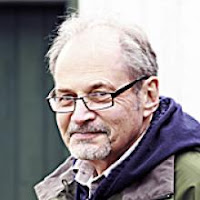
Locus iste a Deo factus est,  inaestimabile sacramentum, irreprehensibilis est. This place was made by God, a priceless sacrament; it is without reproach. This text, set to music by Anton Bruckner in the 19th century for the dedication of a German cathedral is forever associated, in my mind, with the memory of Dr. Henry Schellenberg. I met Henry in 2010 when I auditioned to sing in the Providence University Chamber Choir. One of the first songs we learned was "Locus Iste" - a choir favourite that we would sing regularly for the rest of the time I was with the group. I love this text. It is simple, short, and elegant. I even scrawled the Latin text on the foundation of the new building that my church constructed around the end of 2014. The text names an irreducible truth about the goodness of materiality and the importance of discrete places in our lives as embodied humans and the varied relationships we have in these discrete places with God. Yet in ord...