Posts

"Father, forgive them..."
Image
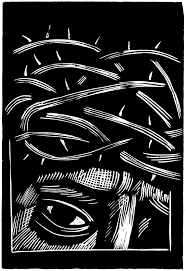
Christ’s first word from the cross, and indeed, his first word to us, is “Father, forgive them, for they know not what they do.” At first glance, this appears as a word of comfort. We are so ignorant of the ways we need saving, yet mercifully, Jesus offers us forgiveness and makes everything alright. But if this is all this word is saying to us, then the cross has been sanitized, sentimentalized, and stripped of its narrative passion in the name of a good atonement theory. As Stanley Hauerwas observes, “...as soon as these words from the cross are bent to serve our needs, to give us a god we believe we need, it is almost impossible to resist entertaining ourselves with speculative readings of Jesus’s words from the cross. For example, we think what a wonderful savior we have in Jesus, who, even in his agony, kindly offers us forgiveness” (Hauerwas, Cross-Shattered Christ , 15). The error in such a reading is a grammatical one. On this reading the objects of divine forgiveness, th...

Lent - A Time to Repent

Image
The late Scottish theologian, James Torrance, notes the nature of "evangelical repentance" in his book Worship, Community, and the Triune God of Grace. Few distinctions in theology are more important for our understanding of worship than that discussed by Calvin in book 3 of the Institutes, between what he calls “legal repentance” and “evangelical repentance” in his critique of the medieval sacrament of penance. Legal repentance says: “Repent, and if you repent you will be forgiven!” as though God our Father has to be conditioned into being gracious. It makes the imperatives of obedience prior to the indicatives of grace, and regards God’s love and forgiveness and acceptance as conditional upon what we do—upon our meritorious acts of repentance. Calvin argued that this inverted the evangelical order of grace, and made repentance prior to forgiveness, whereas in the New Testament forgiveness is logically prior to repentance. Evangelical repentance, on the other hand, takes t...

Between Silence and Utterance

Image
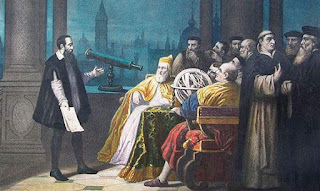
Sermon delivered at St. Margarets, Saturday, January 26th, 2019 Texts: Nehemiah 8, Psalm 19, Luke 4:14-21   Introduction In an oft ignored letter to the Grand Duchess of Tuscany in 1615, [1] an Italian mathematician made the case, following the teaching of early Church fathers like Tertullian, that God has been revealed to humanity in two books, the book of nature and the book of scripture. Several decades earlier, the Council of Trent, to push back against the rampant interpretive pluralism and uncontrollable printing of the Protestant Reformers, had decreed that only those scholars who were licensed by the Church were allowed to exegete scripture – effectively preserving the professional authority of the Church’s magisterium. Picking up on this move, this Italian thinker argued that God’s other book of revelation, the book of nature, was written in a language that is best understood and interpreted by professional mathematicians and those well versed in natural ph...

Rescuing the Contemplative Life from Sentimentality

The rise of secularism is by now the dominant form of life in our post-christendom society. This development has been hailed as a disaster by some and a great victory by others. One of the hallmarks of our secular age is its disenchanted character - the cosmos is no longer apprehended as obviously shot through with divine presence. In other words, a cup is just a cup. The loss of access to a transcendental beyond continues to be mourned and resisted even by the non-religious. In reaction, our culture has become obsessed with recovering and appropriating oriental and arcane practices that offer the promise of some sort of connection with the transcendent beyond that culminates in a consumerist orgy of self-denial about the starker realities of modern life. While much could be said about the forces of consumer capitalism and atomizing neo-liberalism that have created the broad appeal of such practices in popular culture, my interest is primarily in the recovery of Christian conte...

Judgment in the Wilderness

A sermon preached at St. Margaret's Anglican on Dec. 9th, Second Sunday of Advent. Scriptures: -          Baruch 5:1-9 -          Malachi 3:1-4 -          Luke 3:1-6 Prayer: “We are made for you, O God, and our hearts are restless until we find our rest in thee.” (St. Augustine) Intro (Background) On the 2 nd of September, in the year 31 BC, Gaius Octavius finally defeated the armies of Mark Antony and Cleopatra. Over the next couple of years, Octavius would go on to finish pacifying the realm, and in 29 BC he closed the Gates of Janus in Rome, and naming himself Caesar Augustus, signaled the beginning of a peace that would last for the next two centuries and become known as the Pax Romana. Critical historians have repeatedly pointed out that the “peace” of the Pax Romana was, at best, an imperial and hegemonic peace. It was a peace guarant...

A Friday Afternoon Apocalypse

There she held court. Turning first to her right, then to her left, she addressed her subjects in turn - exposing the secrets of the universe and the hidden truths about our common life. Alternating between narration and verse, the woman described the lives of those who wander the forgotten parts of our city streets. With fierce condemnation she called out the sexual violence perpetrated daily on those streets. She spoke with the voice of all the missing and murdered. She described innocence lost, children taken, trust betrayed. On the wings of strong and profaned language, her voice proclaimed to the world that the victims of this violence cannot be silenced. I blinked.  Curious about the identity of her audience, I peered across my empty mug at an equally empty cafe. The only souls in sight being myself and the proprietor who kindly brought the young woman a mug of water. She blinked. Her eyes burned with a fire that matched the heat of her words. Her long lashes ...

Violence and the Foundation of Place: Some reflections on conquest narratives in the Book of Joshua

Image
The above photograph was taken at an exhibit at the Winnipeg Graffiti Gallery created by Jordan Stranger. The exhibit was called "I am not an Indian" and features a Canadian flag with the front cover of the Indian Act superimposed upon it. As the red runs to the bottom, you see it turns into the bloody handprints of children, finally collapsing into the graves of residential school victims. This image is countered by the "tree of life" in the foreground that surrounded by various cultural symbols that point a way forward to a more truly multicultural Canada via the rainbow streamers connecting the pole back to the flag.  Introduction             In this paper I begin by examining the role violence plays in the construction of the political geography of Israel by providing a close analysis of the conquest narrative found in the book of Joshua. I focus on this text because it has strong resonances with the violent socia...